Colours of Tamil Nadu
Posted by Claire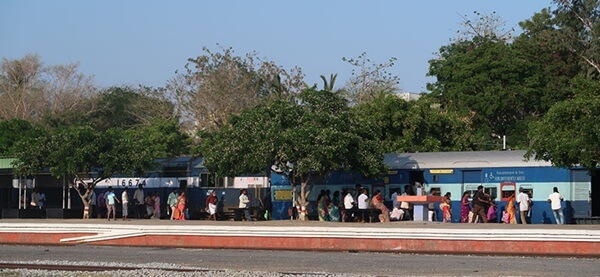
Alighting from the SBC Intercity train after a six hour journey from Palakkad in Kerala, I have no doubt whatsoever about where I am in India. Women crowding the platform are dressed in the most exquisitely coloured iridescent saris that capture the sun rising and setting all at once. Turquoise, lilac, lemon, tangerine, cerise, violet and lime green satins and silks rustling and in motion, set off with creamy white jasmine buds in shining black hair act as an instant spirit reviver after a long hot journey.
These shimmering hues contrast beautifully with the brilliant greens of the paddy fields and brick reds of the immaculately ploughed earth on view from the railway line. This is TAMIL NADU in all its glory. It’s late in the afternoon, the sun is lowering and I have arrived at Dharmapuri. Tamils love bright colours and this is reflected in their warm outgoing nature. Ever since I first travelled around this southern state in the 1990s, I have been enchanted by the variety and vibrancy of colours, applied without restraint to places of worship, homes and dress.
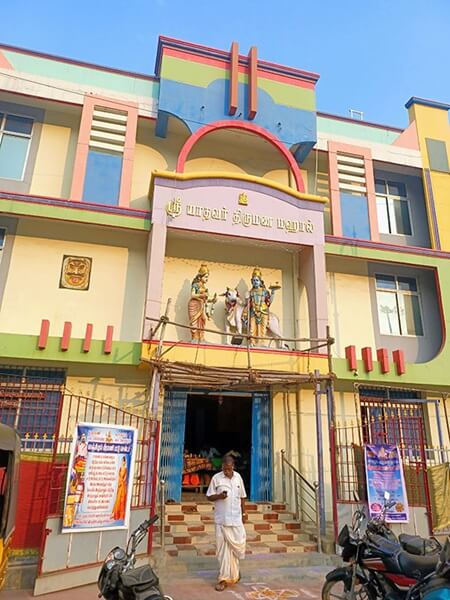
The embellishing of homes with pattern and colour seems particularly evident in the residential areas of towns such as Dharmapuri, Chidambaram and Karaikudi. On this trip to India I am visiting Tiruvannamalai for the first time, a city built around the famous Arunachalesvara Temple, positioned at the foot of an extinct volcano and sacred mountain. Many people live and work close to the busy central temple compound, but wandering further afield, I find quiet, plant-filled cul-de-sacs containing absolute gems of architectural expression.
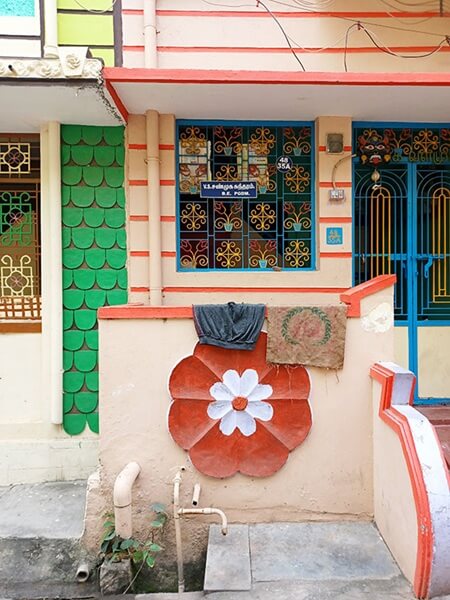
Here in Tiruvannamalai, the profusion of multi-coloured house facades is greater than anywhere else I have yet come across. Back home and pondering where this tradition comes from, I found an interesting article on thespaces.com website by Claire Carponen in which she presents a photographic project by Kassia Carr in collaboration with Spandana Gopal of design company Tiipoi.
They point to a fact that makes total sense to me now but had not been aware of; that Ettore Sottsass, the prolific Italian designer and Memphis Group founder travelled extensively in India in the 1960’s and was very inspired by these brightly coloured geometrically abstract-patterned houses, especially in the city of Tiruvannamalai. This is a very happy piece of information to discover having always loved Sottsass’s design sensibility.
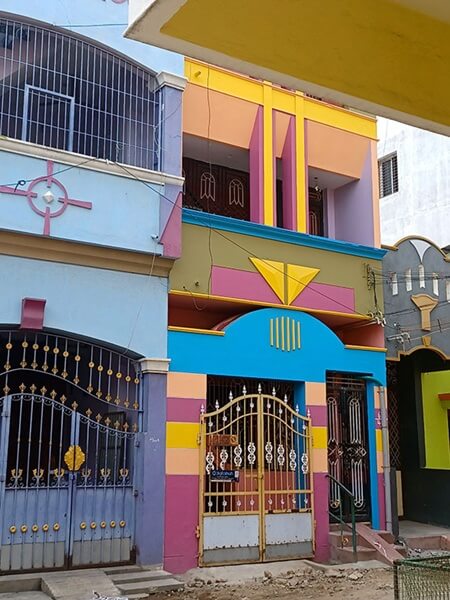
Spandana and Kassia come to the conclusion that there is not one particular factor that leads Tamils to paint their homes with such a bright array of colours. Inspiration will likely derive from the traditional temple design of the south, the beautifully painted gopuras, pictorial ceilings and pillars, and symbolic motifs in jewel-like hues.
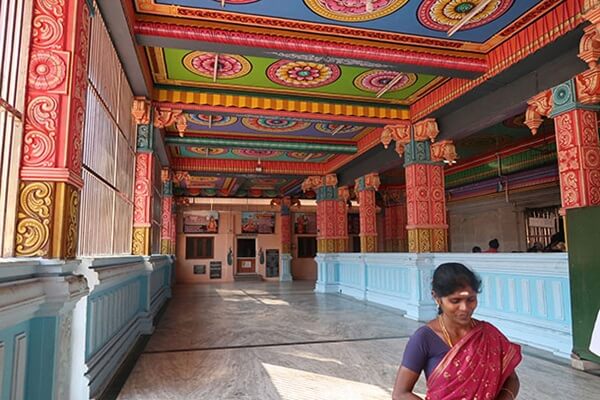
But they also suggest that the use of colour is an expression and extension of personal pride and cultural identity. I feel it is a likely indicator of the industriousness of the Tamil people too (it would be far easier to paint in one or two colours). Building materials are also cited as a possible factor; the overriding use of concrete from the 20th century until now has enabled the introduction of more varied geometric shapes, curves and surface pattern which in turn can be highlighted and enhanced with the use of ever more colour. Paints are much more readily available too.
The importance given to the presentation of houses here chimes well with the strong Tamil belief in the importance of hospitality, especially that offered to strangers and guests. Every morning, first thing, front steps or thresholds are washed down and anointed with a fresh rangoli, a pattern made of rice flour or coloured chalks. This is a time-honoured gesture that symbolizes a daily welcome to the deity and any visitors into the home.
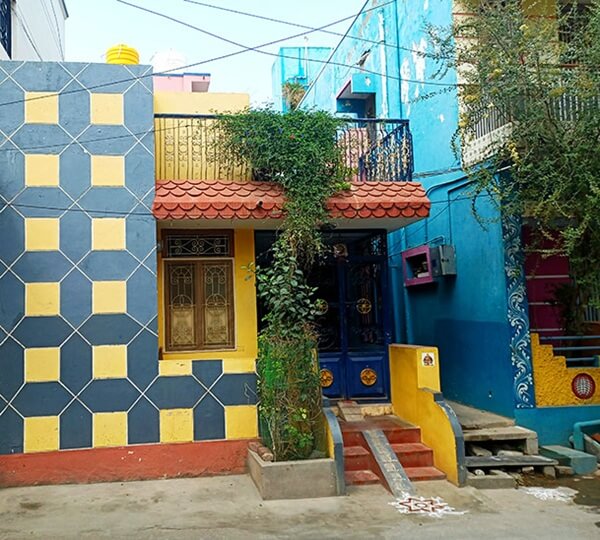
For me, a big part of the pleasure of these colour and pattern extravaganzas is their dialogue with their neighbours. There are no clashing colours on these exuberant homes with big personalities; anything goes, the more unlikely or outlandish, the more joyful.